Wireless sensors and Yggio, the open operational layer for cities, property owners and transport operators. Your data, your operations, your sovereignty.

For the people who run a city's digital infrastructure

One platform for the whole city.
Each administration its own account.

Streets, environment, schools, property and the city-owned companies each run their own devices and data on the city's Yggio, and share what they choose: the LoRaWAN network, sensors, dashboards, data, support and knowledge.

The problem today

One platform per administration, and nothing in common

Familiar in any city:

  • Every administration and company buys its own platform and its own network, and the data stays inside each.
  • The same street is measured twice, and the neighbouring department does not know the data exists.
  • When data is shared, it goes as an email attachment: a copy that goes stale and can never be taken back.
  • A small administration cannot carry a procurement, a security review and daily operations on its own, so nothing gets started.
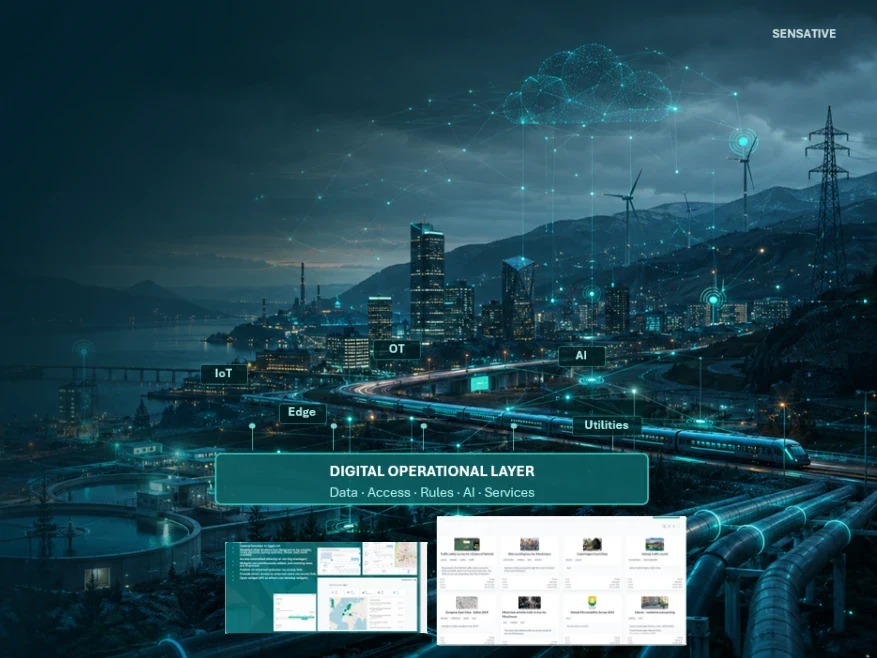
A city at night, with its systems connected through one operational layer

Your own account, the city's shared infrastructure

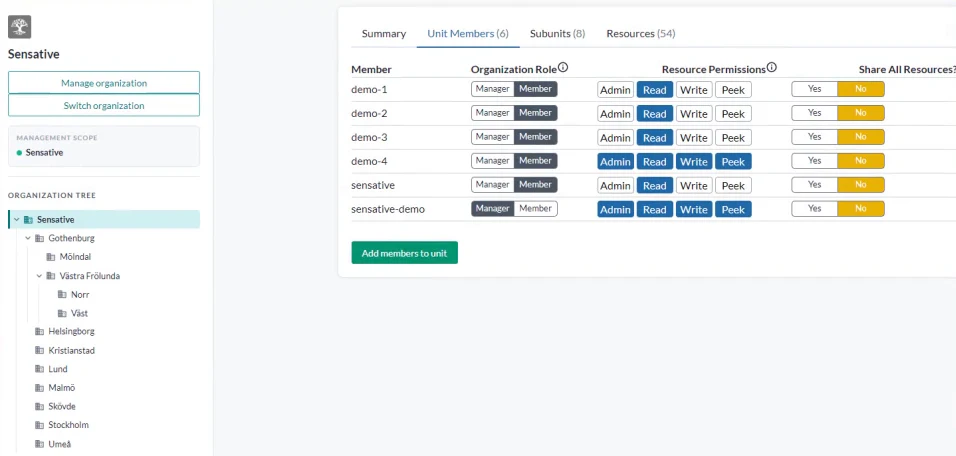
Access rights in Yggio: an organisation tree with one unit per organisation, and read, write and admin permissions per member

Own account, own data

The organisation tree mirrors the city: one unit per administration or company, each owning its devices and data. It decides who sees what, a whole organisation, a live group of devices or a single resource, and can withdraw it at any time.

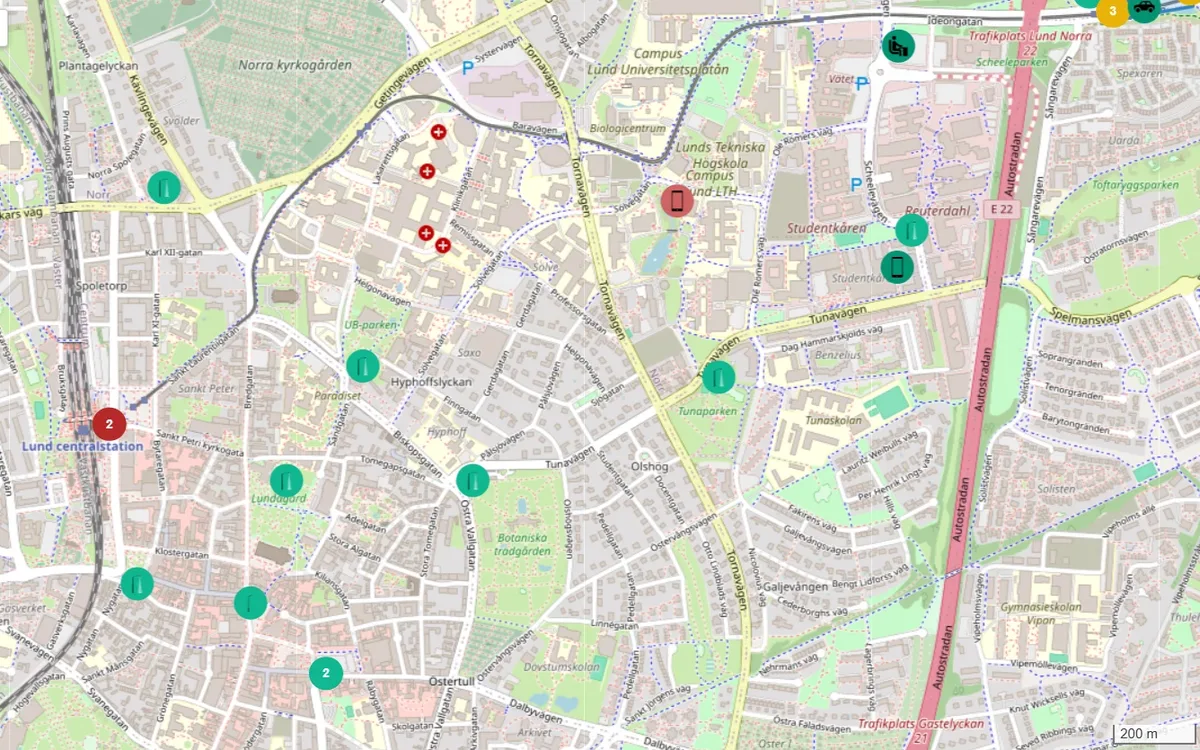
The Yggio map of a city: devices across the streets, coloured by LoRaWAN signal strength

Shared infrastructure

One city-wide LoRaWAN network and its gateways serve every administration, and so does the platform: one procurement, one security review and one operation instead of one each. A new administration gets an account, not a project.

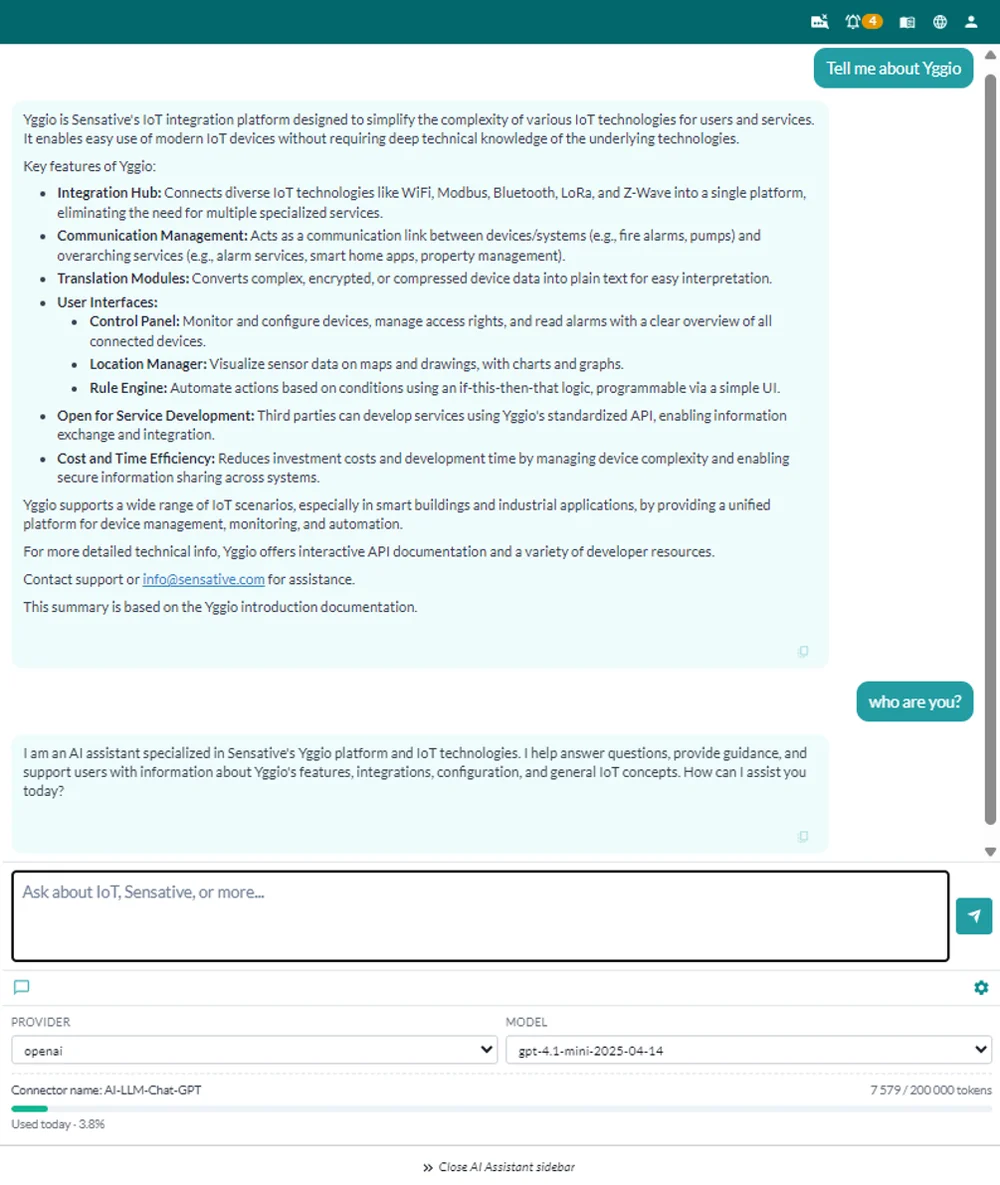
The Yggio AI assistant answering a question from the documentation

Shared data, dashboards, support and knowledge

Datasets are listed once and found by the others. Dashboards are built once and shared per role. And everyone learns the same platform, with one documentation, an AI assistant that answers from it, and one support channel.

A week in the city

Three ordinary moments, and one place to look in each of them.

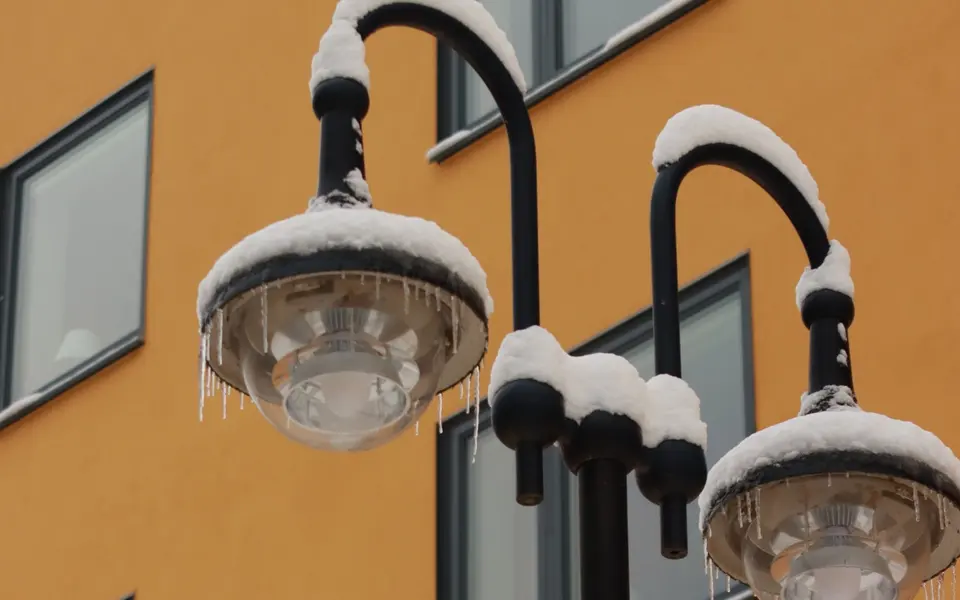
Street lights in front of a city building
New account · schools administration12 classrooms on the city network
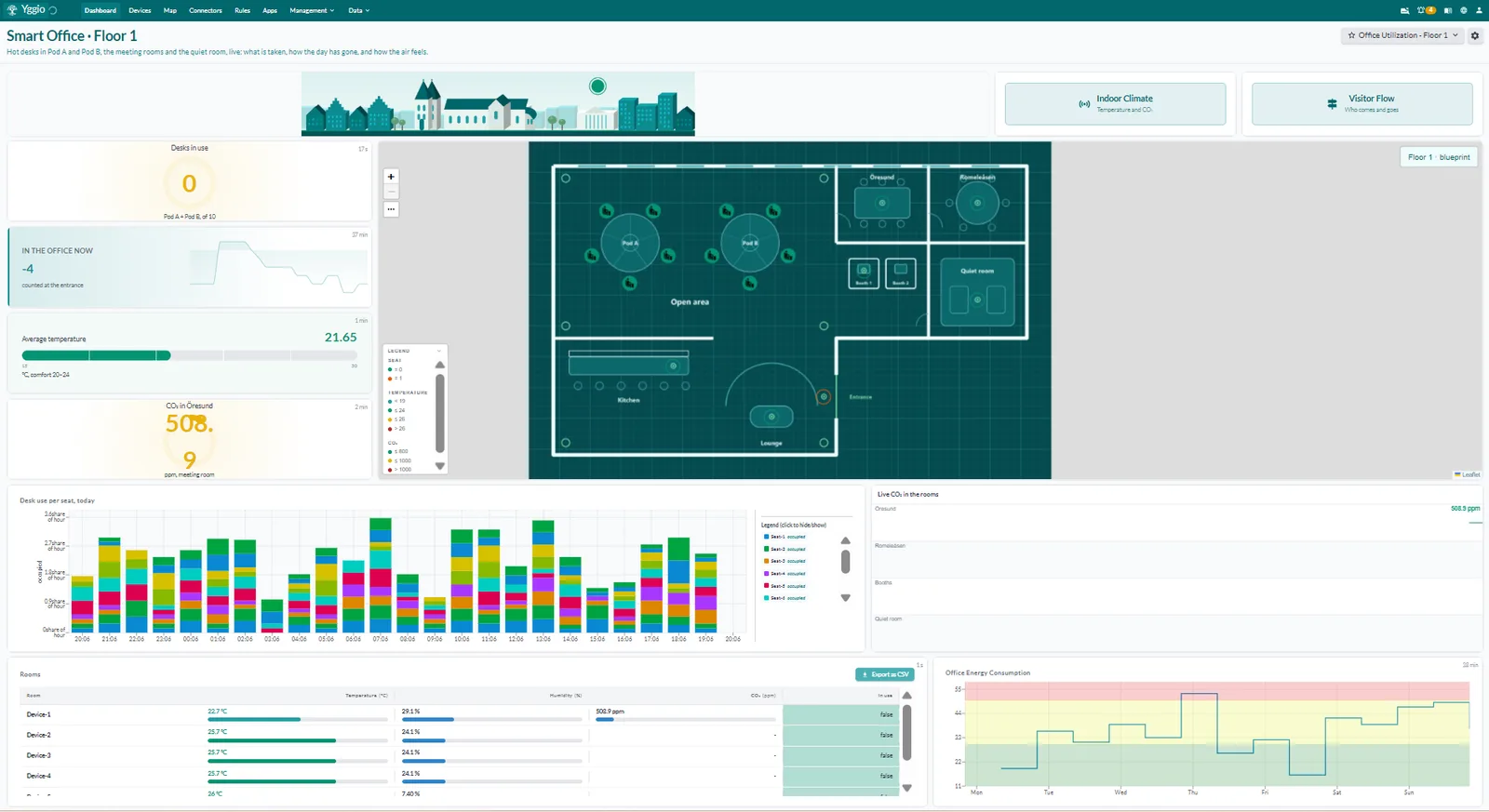
The Smart Office dashboard in Yggio for one floor: desks in use, people in the office now, average temperature and CO₂, a floor plan with every desk and room, and desk use per seat through the day

The schools administration connects its first classrooms

CO₂ and temperature sensors go up in twelve classrooms and report over the city's LoRaWAN network; the gateways are already there, put up for the street department's lighting. The administration gets its own account, sees its own devices, and nobody else does until it chooses to share.

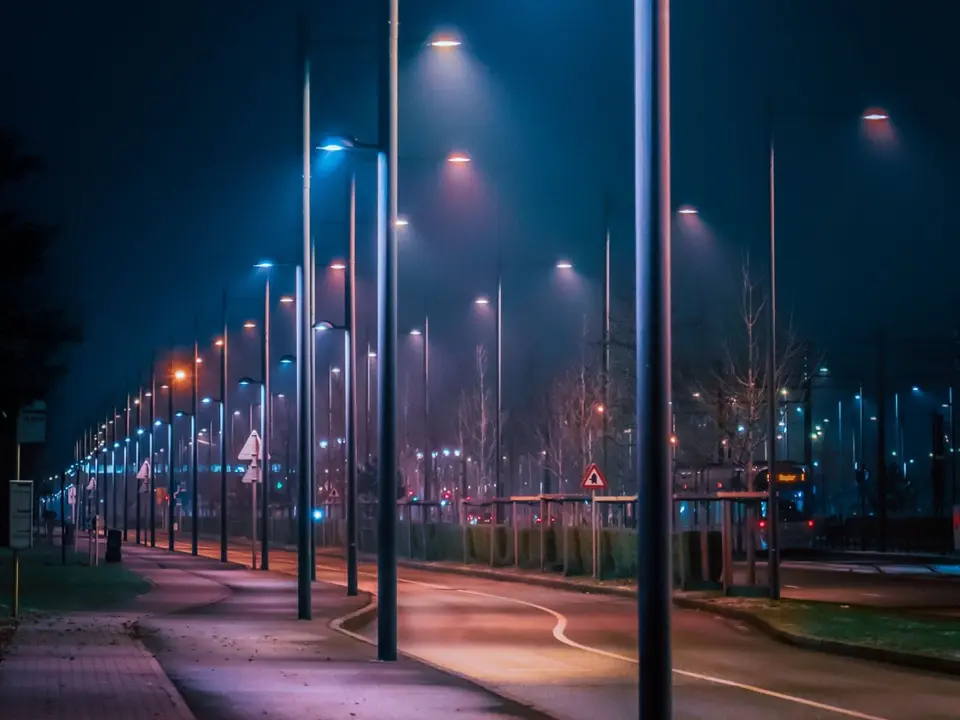
A city street at night
Shared · air quality, city centreEnvironment → planning office, read only
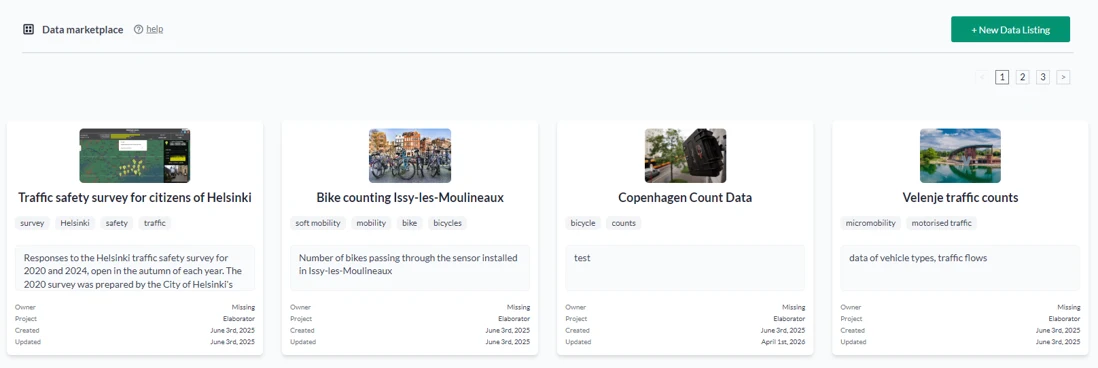
Dataset listings in the Yggio Data Marketplace

The environment department shares its air-quality data

The planning office is redesigning a street the environment department already measures. The dataset is listed in the city's Data Marketplace, shared read-only with the planning office's organisation, and stays current; no export, and the owner can withdraw it when the work is done.

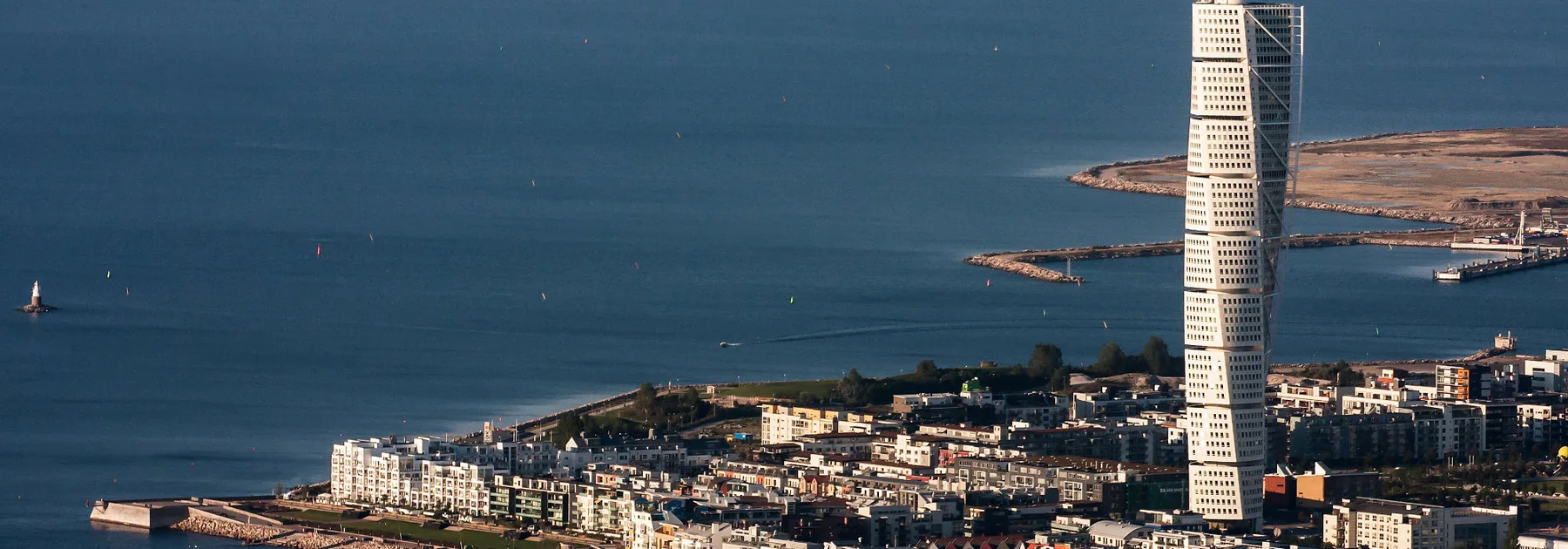
A city by the sea from above
Water level · canal, north quayProperty on-call and rescue services notified
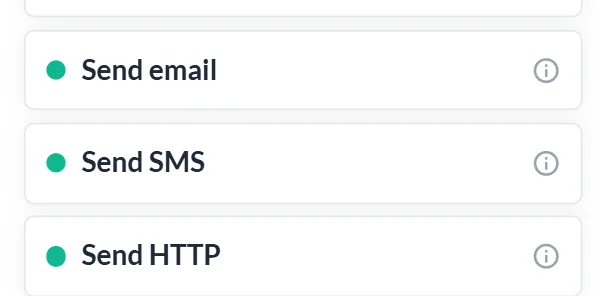
Actions in the Yggio rule engine: send email, send SMS and send HTTP

The canal rises

A water-level sensor on the north quay crosses the threshold. One rule sends the alarm to the property department's on-call and to the rescue services, and both see the same reading on the same map, in their own accounts.

More on the Data Marketplace, traffic signals and street lighting, AI for the city

What a city needs from its platform

The list a city puts in its requirements, and what Yggio answers.

Sovereignty

The city owns its data and its device keys: one open API, the NGSI-LD data model, open decoders and its own join server.

Cybersecurity

Rights per resource, single sign-on through Keycloak, a ten-year access log, and a 2026 penetration test with no critical, high or medium findings.

On premises or in the cloud

The same Yggio in the city’s chosen cloud, on its own servers or on site, with backups at least every 24 hours.

Scalable

From one administration to the whole region: IoT Västra Götaland is set up to run more than 100 organisations on one platform.

Easy for different needs

A dashboard for the caretaker, a map for the street department, a drag-and-drop rule for operations and an API for IT.

Admin per account, one root for the city

Each administration manages its own users, devices and sharing. The root account over the whole tree can sit with the city’s IT, or wherever the city decides.

Dashboards shared as a link

A dashboard can be shared by URL with a colleague, a contractor or the public, without giving them an account.

Open to third-party services and devices

Any LoRaWAN, Modbus, BACnet or RSMP device, and Grafana, Power BI, Node-RED or the city’s own applications, on one API.

Data normalisation

One data model across all translators: the same names, types and units whatever the vendor, so a new sensor fits existing rules.

Metadata and classification

Every device and dataset carries its owner, place, description and tags, so data can be classified, found and shared on the right terms.

Logs and traceability

Device history kept as long as the city sets, every access-rights change logged, and an execution history for every rule.

Updates without replacing the sensor

Square and Puck take new apps over LoRaWAN or NFC and new firmware over NFC, every change logged: a new job, the same sensor.

Trust and sovereignty: how Yggio meets EU and US requirements

Stockholm, Västra Götaland and Malmö

Cities that already run this way

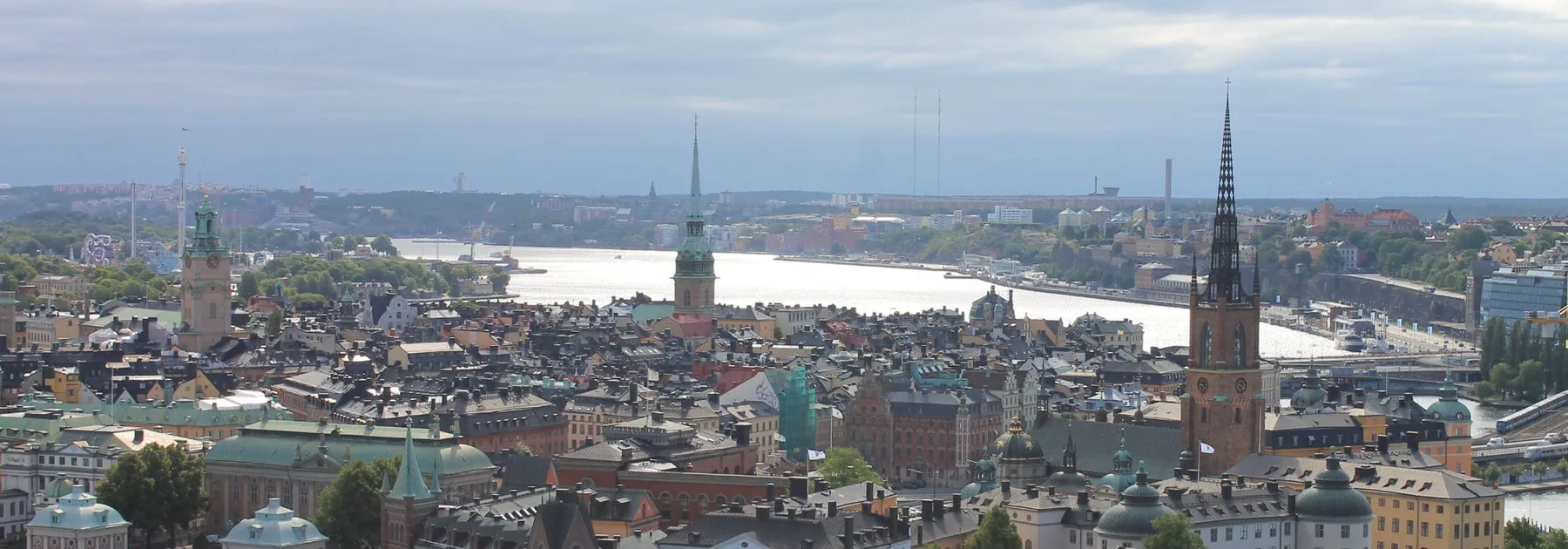
The City of Stockholm runs Yggio as its central IoT platform, offered to its administrations and city-owned companies as a shared service with the cost distributed between them, alongside a city-internal LoRaWAN network that they order as a service. In IoT Västra Götaland, one regional platform is set up for more than 100 municipalities, municipal companies and municipal associations. Each has its own environment and can share integrations with the others when it chooses to. In Malmö, Sensative delivered Yggio and a city-wide LoRaWAN network, first for water levels in the canals and in Öresund, and today we are connecting the city's traffic signals to the same platform.
Pilot: two administrations and one shared network

Four steps, from the first conversation to the whole city.

  1. Scope it in a conversation: which administrations start, what each wants to know and automate first, and what they will share with each other.

  2. Set up the organisation tree, one unit per administration, and connect the LoRaWAN network: the city's own, an operator's, or one delivered with Yggio.

  3. Run the first use case in each administration on its own account, and share the first dataset or dashboard between them.

  4. Add the next administrations and companies on the same naming and the same rules; each gets its own account and can reuse what the others share with it.

Book a demo or ask about the pilot

Tell us which administrations want to start, and what they already run.

Or write to sales@sensative.com

Technical details

For IT, procurement and the administrations' own specialists.

One Yggio, many organisations
  • An organisation tree with one unit per administration or company; each organisation is a resource with a single owner, and a user can be a member of several.
  • A role per member (manager or member) and resource permissions per member and unit: admin, read, write and peek.
  • Share a whole organisation, a live group of devices or a single resource, and withdraw it again at any time.
Shared infrastructure
  • A city-wide LoRaWAN network, delivered with Yggio or connected from the operator the city already uses; its gateways serve every administration.
  • Sensors and meters from any vendor over LoRaWAN, 4G/5G, Modbus, BACnet, RSMP or an API; translators give them one NGSI-LD-based data model with the same names and units.
  • In the cloud, on the city's own servers or on site. The data stays the city's.
Shared data, dashboards and knowledge
  • The Data Marketplace lists datasets with description, tags, area and owner, so another administration can find and ask for them.
  • Dashboards per role, rules with email, SMS and HTTP actions, and reports on a schedule; the open API for the systems each administration runs.
  • One documentation for everyone, an AI assistant in the control panel that answers from it, and one support channel for the platform.

Related solutions: IoT Stockholm, IoT Västra Götaland, Digital Malmö