Wireless sensors and Yggio, the open operational layer for cities, property owners and transport operators. Your data, your operations, your sovereignty.

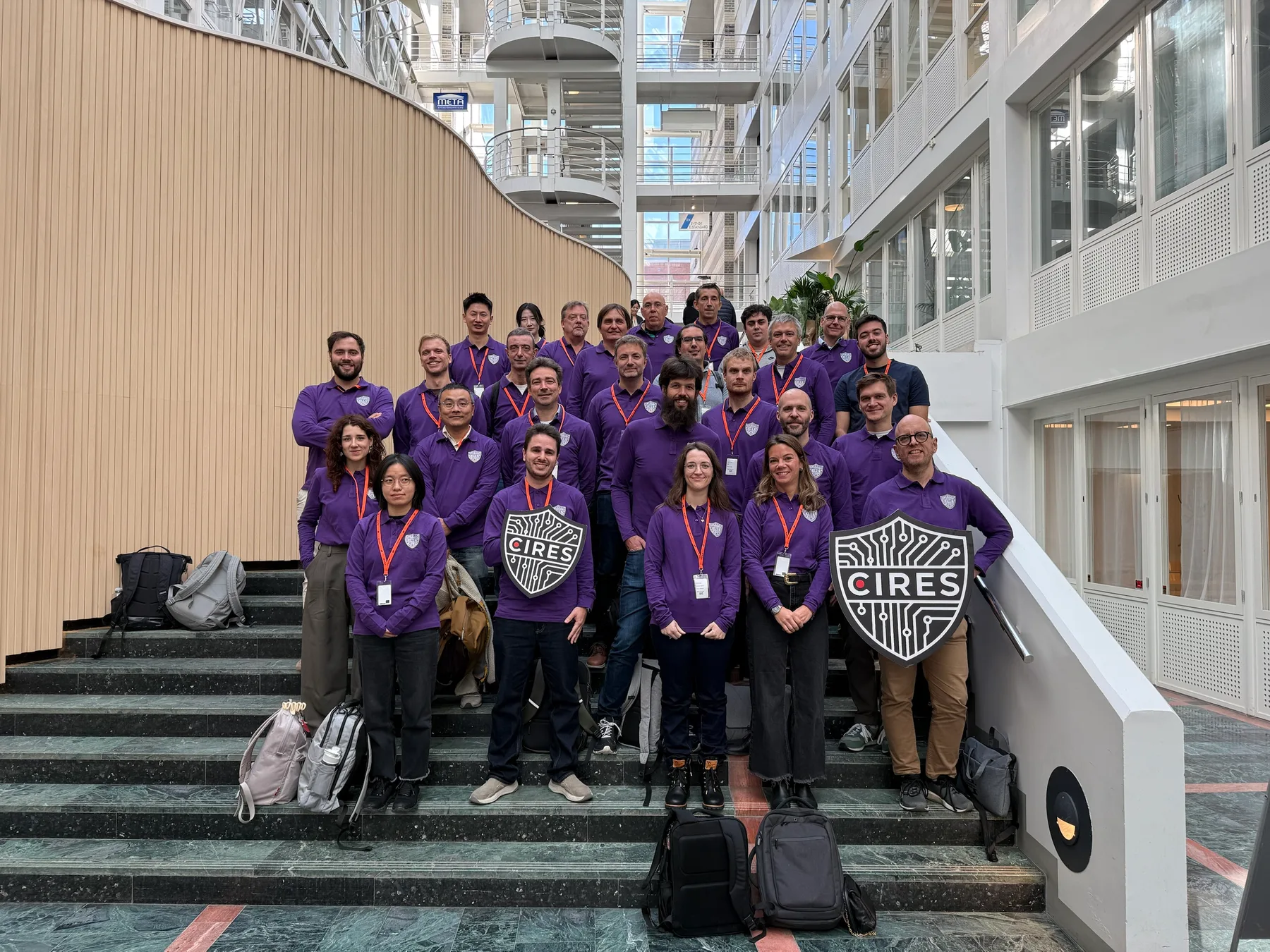
The CIRES consortium at the kick-off in Kista, Stockholm: about 35 partners in purple CIRES shirts on a staircase in a glass-roofed atrium

CIRES - HORIZON-JU-CHIPS-2025-RIA #101253052

Ongoing
Project lead: RISE Research Institutes of Sweden
← Back to Research Projects
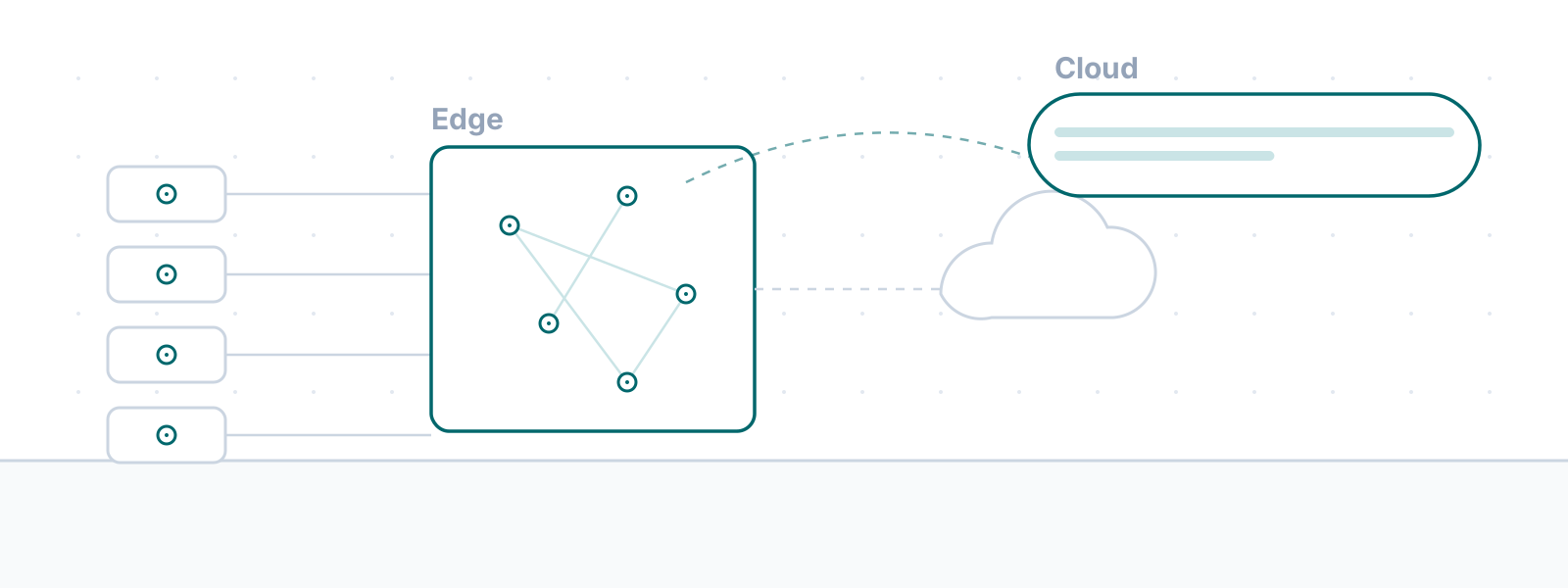
Schematic illustration: devices feeding an edge node that synchronises with the cloud

Background

Energy grids, digital services and supply chains are being digitalised at speed, and with that comes exposure: to cyberattacks, to disturbances in connectivity and power, and to plain human error. CIRES (Critical Infrastructure Resilience through Edge computing Systems) sets out to keep these systems running when parts of the infrastructure fail.

The project builds on an edge-to-cloud approach and develops three technologies together: embedded AI for real-time anomaly detection and autonomous decision-making, resilient communication architectures for mobile and distributed infrastructure, and distributed edge-cloud platforms designed for extreme availability and operational continuity.

CIRES runs from September 2026 to August 2029 under the Chips Joint Undertaking, coordinated by RISE Research Institutes of Sweden with sixteen partners in Sweden, Germany, the Netherlands, Spain and Norway.

Keep it running

The project’s own vision film, in one and a half minutes: why critical infrastructure needs intelligence at the edge, and what CIRES will build.

Sensative leads the edge-to-cloud architecture

Sensative leads Project Area 3, Distributed Architecture for Edge-to-Cloud, together with RISE, the Technical University of Munich and Almende. Its task is the architectural backbone of CIRES: one sovereign, interoperable edge-to-cloud continuum that serves as the middleware for smart cities, critical infrastructure and buildings. It manages data across edge and cloud nodes, keeps services running when connectivity degrades, and supports real-time, context-aware automation and AI.

For Yggio this means the next step beyond today’s platform: interoperability across IoT and legacy systems through open NGSI-LD APIs and standard data models such as FIWARE Smart Data Models, SAREF and RealEstateCore; distributed synchronisation between edge and cloud; and federated intelligence, so that AI runs where the data is. The results feed back into the product as reusable components (distributed database and synchronisation, context-aware automation, container-based redundancy) and into standardisation work at ETSI and FIWARE.

Edge computingResilienceCritical infrastructureChips JU
Other participants (16)
  • RISE Research Institutes of Sweden (coordinator)
  • Qamcom Research and Technology
  • Sensative
  • ESC Aerospace
  • Giesecke+Devrient Mobile Security Germany
  • Technical University of Munich
  • Fraunhofer-Gesellschaft
  • Almende
  • Delft University of Technology
  • Safran Electronics & Defense Spain
  • Schneider Electric España
  • Acorde Technologies
  • University of Granada
  • Cuerva Energía
  • Heimdall Power
  • NTNU – Norwegian University of Science and Technology
Funded by

Research enquiries

cto@sensative.com