STRIPS DRIP OIL LoRaWAN
Strips
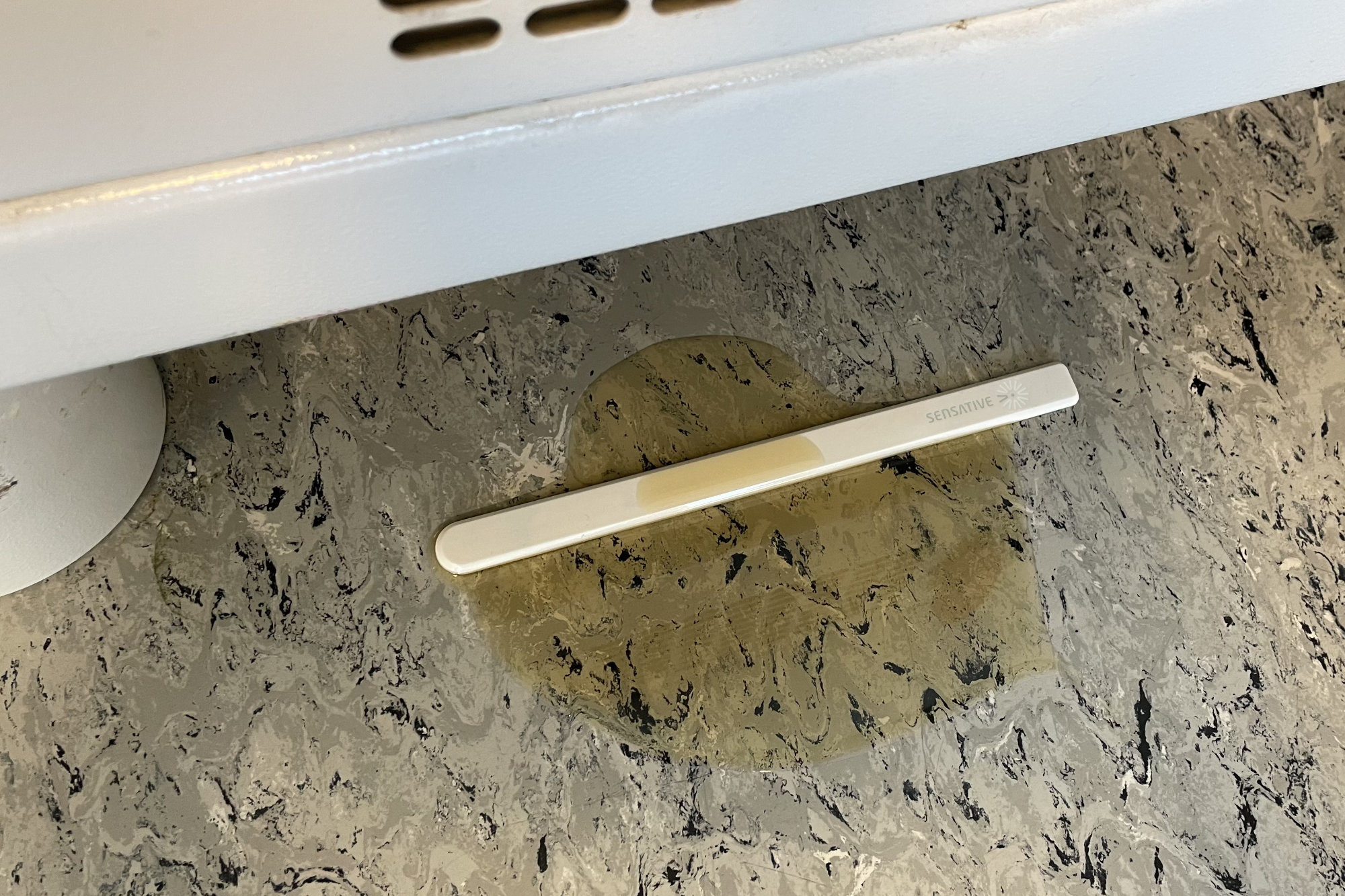
LoRaWAN Drip Oil is an ultra-thin (4 mm) wireless sensor designed for early
detection and classification of liquid leaks in industrial environments. It is
ideal for monitoring machinery, hydraulic systems, and technical installations
where understanding the type of leakage is critical.
The sensor
features a patent-pending dual sensing technology that detects leaks and
distinguishes between water and other liquids.
An external
capacitive sensor detects the presence of any liquid, while a foil-integrated
capacitive sensor—combined with a liquid-absorbing layer—reacts specifically to
non-water (viscous) liquids such as oil. This enables reliable differentiation
between water-based and non-water leaks.
Its slim
and robust design allows installation on flat surfaces such as floors, trays,
or beneath equipment and piping—detecting leaks at an early stage, even from
the first drops.
With a
battery life of 10+ years – designed for long-term, maintenance-free operation,
Strips Drip Oil is built for reliable performance in demanding environments.
Typical use cases
- Monitoring of hydraulic systems
and machinery
- Detection of oil and other
viscous liquid leaks
- Leak detection under pipes,
tanks, and industrial equipment
- Machine
rooms and technical installations
- Protection
of critical infrastructure
Key advantages
- Patent-pending liquid
classification – distinguishes between water and non-water liquids
- Dual sensing technology –
detects any liquid and identifies its type
- Early warning – detects leaks
from the first drops to prevent damage
- 10+ years battery life –
designed for long-term, maintenance-free operation
- Discreet yet robust design –
ultra-thin and easy to install on flat surfaces
- Reliable in industrial
environments – built for demanding use cases
Installation
Strips Drip
Oil can be easily mounted on flat surfaces and installed using Sensative +Clip,
enabling flexible and secure placement in a wide range of environments.
Service
& maintenance
The
liquid-absorbing foil is designed to react to non-water liquids and should be
replaced after exposure, as it becomes contaminated by oil or other substances.
Rev B, 2026-03-18